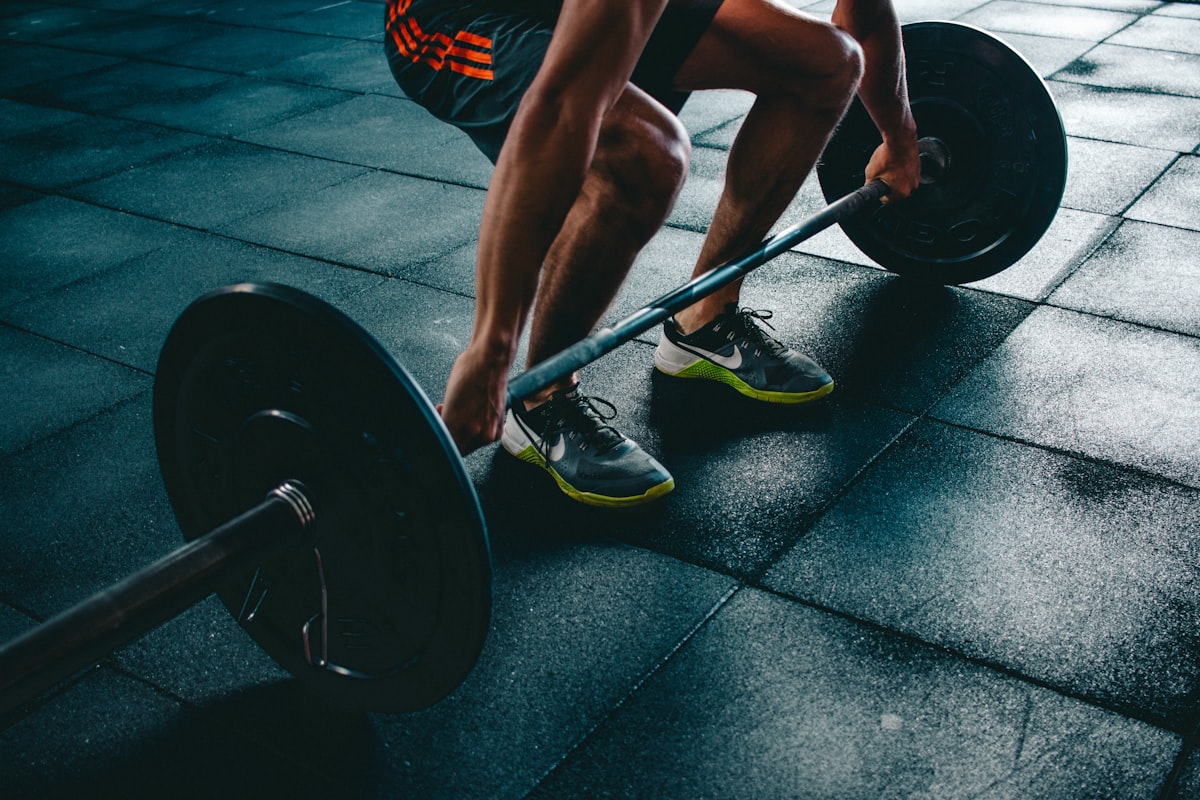
Does HIIT Actually Burn Fat? A Confrontation with the Research
Meta-analyses show HIIT matches steady-state cardio for fat loss, but in less time. The afterburn effect is smaller than you think.
The marketing slogan that outran the evidence
Around 2012, a legitimate finding from exercise physiology labs escaped onto the internet and morphed into a marketing message that barely resembled the original research. The claim: HIIT burns fat faster than any other form of exercise, and the “afterburn effect” keeps your metabolism elevated for hours, torching calories while you sleep. Fitness apps, YouTube channels, and supplement companies amplified the message without nuance. By 2015, HIIT had become the number one fitness trend worldwide according to the American College of Sports Medicine’s annual survey.
The actual science tells a more complete story. Three meta-analyses published between 2017 and 2018 examined whether high-intensity interval training produces superior fat loss compared to moderate-intensity continuous training (MICT). The collective answer was consistent and, for many HIIT enthusiasts, probably unexpected. Wewege et al. (2017, PMID 28401638) pooled 13 randomized controlled trials with overweight and obese adults and found that HIIT and MICT produced comparable reductions in total body fat percentage. The difference between the two approaches was not statistically significant.
What made HIIT genuinely interesting was not a fat loss advantage but a time advantage: participants in HIIT groups spent roughly 40% less time achieving the same body composition changes. That is a real, practical benefit. It is not, however, the same thing as “HIIT burns more fat.”
What three meta-analyses actually found
The Wewege meta-analysis was not an isolated result. Keating et al. (2017, PMID 28513103) conducted an independent systematic review of 31 studies and reached the same conclusion: no significant difference between HIIT and MICT for any body fat outcome. The analysis went further, noting that when HIIT protocols used less total time and energy expenditure than MICT protocols, fat loss results tended to favor MICT, although the difference did not reach statistical significance.
Maillard et al. (2018, PMID 29127602) added a third layer. Their meta-analysis found that HIIT was associated with significant reductions in total body fat, abdominal fat, and visceral fat. Running-based protocols appeared to produce slightly better results than cycling-based ones, though the authors cautioned that the variety of protocols used makes direct comparisons difficult.
These three analyses tell a consistent story. HIIT is an effective tool for fat loss, roughly as effective as traditional cardio, with the practical advantage of requiring less time. It is not, based on the weight of current evidence, a superior fat loss method. The distinction between “equally effective in less time” and “burns more fat” matters enormously for anyone designing a training program with realistic expectations. (The fitness industry tends to blur that distinction, for obvious commercial reasons.)
The afterburn effect: real but overhyped
The afterburn effect, formally known as Excess Post-Exercise Oxygen Consumption (EPOC), is perhaps the most overestimated mechanism in popular fitness. It is real. After intense exercise, the body consumes additional oxygen to restore homeostasis, repair tissues, and clear metabolic byproducts. Metabolic rate stays above baseline for some time after exercise ends.
The relevant question is: how much does it actually amount to?
Knab et al. (2011, PMID 21311363) published the most frequently cited study supporting EPOC claims. They found that a 45-minute bout of vigorous exercise elevated metabolic rate for 14 hours, resulting in roughly 190 additional kilocalories burned. That finding is legitimate, but the details matter. The session consisted of 45 minutes of vigorous cycling at approximately 73% of VO2max. Not a 4-minute Tabata session. Not a 10-minute bodyweight circuit. A sustained 45-minute effort near maximum.
Extrapolating Knab’s result to short HIIT sessions is a common mistake. A 10-minute high-intensity circuit may generate some afterburn, but the magnitude scales with both intensity and duration. The EPOC from a brief session likely falls between 30 and 80 additional kilocalories — roughly the energy in a medium apple. Worth having? Certainly. A significant fat loss driver on its own? The math says no.
Think of EPOC like loose change accumulating in the car’s glove compartment. It adds up, and after a year it might cover lunch. But nobody builds a retirement plan on it. Your nutrition and total weekly exercise volume are the paycheck; EPOC is the spare change.
Why the calorie deficit remains king
Here is the point that the HIIT marketing machine sidesteps: exercise alone, whether HIIT or any other modality, is a remarkably inefficient way to lose fat without simultaneous dietary changes. Keating’s meta-analysis observed that neither short-term HIIT nor MICT produced “clinically significant” reductions in body fat when exercise was the sole intervention.
A typical 20-minute HIIT session burns roughly 200-300 kilocalories, depending on body weight and actual intensity. A single restaurant meal can easily exceed 1,000 kilocalories. The arithmetic is unforgiving: you cannot outrun a caloric surplus, no matter how many interval sessions you stack in a week.
What exercise does, and does well, is create a metabolic environment that supports fat loss. Boutcher (2011, PMID 21113312) reviewed the mechanisms through which high-intensity intermittent exercise influences fat metabolism. HIIT triggers a pronounced catecholamine response (adrenaline and noradrenaline) that stimulates lipolysis — the mobilization of fatty acids from adipose tissue. It activates AMPK, an enzyme that promotes fat oxidation and inhibits lipogenesis. These are real physiological effects. But mobilizing fatty acids and losing body fat are not the same thing. If you replace the calories burned, the mobilized fatty acids return to storage.
Martin J. Gibala, PhD, Professor of Kinesiology at McMaster University and one of the most published HIIT researchers in the world, has demonstrated in controlled trials that brief, intense interval sessions produce metabolic and cardiovascular adaptations comparable to traditional endurance training in a fraction of the time, yet his work is equally clear that the role of exercise in fat loss remains supportive of dietary energy balance (PMID 27115137).
The practical takeaway: HIIT is a time-efficient exercise strategy that can support fat loss within a caloric deficit. It is not a substitute for that deficit.
Real advantages of HIIT over steady-state cardio
If HIIT does not burn more fat, why choose it? The research points to several genuine advantages that have nothing to do with marketing hype.
Time efficiency is the advantage with the strongest scientific backing. Gillen et al. (2016, PMID 27115137) found that three weekly sessions of 10-minute sprint intervals improved insulin sensitivity and cardiorespiratory fitness comparably to three weekly 45-minute moderate sessions over 12 weeks. The HIIT group trained 30 minutes per week. The MICT group trained 135 minutes per week. Same metabolic outcomes, a quarter of the time.
Visceral fat reduction is another area where HIIT may hold a slight edge. Visceral fat — the metabolically active adipose tissue surrounding the organs — has a higher density of catecholamine receptors than subcutaneous fat. The pronounced catecholamine release during high-intensity intervals may reach these deep fat deposits more effectively. Maillard’s 2018 meta-analysis found that HIIT was associated with significant reductions in both abdominal and visceral fat, even when total weight changes were modest.
Cardiovascular fitness improvements are consistently greater with HIIT. Gibala et al. (2012, PMID 22289907) reviewed the evidence and concluded that low-volume HIIT produces rapid improvements in VO2max, mitochondrial content, and performance. A higher VO2max is independently associated with lower all-cause mortality, regardless of body fat percentage. So while HIIT may not make you leaner faster, it may make you healthier faster.
Muscle preservation during fat loss also favors HIIT over pure steady-state cardio. The growth hormone and catecholamine response to high-intensity work creates a hormonal environment more conducive to muscle retention than long, moderate sessions, which can promote cortisol elevation and, in some contexts, muscle protein degradation.
How to use HIIT for fat loss in practice
The gap between “HIIT can help with fat loss” and “here is how to apply it” is where most people get lost. The research suggests several concrete parameters.
Frequency: three sessions per week is the most studied protocol. The ACSM (Garber et al. 2011, PMID 21694556) recommends at least one rest day between vigorous sessions. Jumping from zero to five weekly HIIT sessions is a recipe for overtraining, joint pain, and program abandonment within a month.
Duration: 10-20 minutes of actual work per session. This does not include warm-up and cool-down, which should add another 5-10 minutes. The Gibala protocol (three 20-second sprints within a 10-minute session) and the Tabata protocol (eight sets of 20 seconds at maximal intensity, 10 seconds rest) both have solid scientific support.
Intensity: genuine HIIT requires working at 80-95% of maximum heart rate during work intervals. Many people who say they do “HIIT” are actually performing moderate-intensity interval training, which is perfectly valid but produces different physiological responses. If you can hold a conversation during work intervals, you are not doing HIIT.
The non-negotiable complement: a caloric deficit through dietary awareness. The research is unequivocal on this point. HIIT without attention to energy intake is unlikely to produce meaningful fat loss. HIIT within a moderate caloric deficit (300-500 kilocalories per day) is associated with preservation of lean mass and preferential reduction of visceral fat.
RazFit’s bodyweight HIIT workouts offer 10-minute protocols with tracking and progression, and the micro-workouts approach works for days when even 10 minutes feels like too much.
Separating signal from noise
The science of HIIT and fat loss is not complicated. It is simply less dramatic than the fitness industry would prefer. Three meta-analyses with combined data from dozens of randomized controlled trials point to the same conclusion: HIIT is associated with fat loss comparable to traditional cardio, achieved in roughly 40% less training time. The afterburn effect is real but modest. A caloric deficit remains the primary driver of fat loss, regardless of exercise modality.
What HIIT offers is efficiency and metabolic versatility. In 10-20 minutes, you can generate cardiovascular improvements, hormonal responses favorable to body composition, and a sense of accomplishment that supports long-term adherence. For people who find 45-minute treadmill sessions tedious (and that includes the vast majority of the exercising population), HIIT provides a credible, evidence-backed alternative.
The next step is straightforward. Pick a bodyweight HIIT format you can perform three times per week. Pair it with dietary awareness — not obsessive calorie counting, but honest attention to energy balance. Track your sessions to maintain consistency rather than worrying about calories burned in any single workout. And discard any marketing claim promising that HIIT will melt fat while you sleep. The body does not work that way. But what it does, when you combine smart training with sensible nutrition, is adapt remarkably well.
References
- Wewege MA, van den Berg R, Ward RE, Keech A. “The effects of high-intensity interval training vs. moderate-intensity continuous training on body composition in overweight and obese adults: a systematic review and meta-analysis.” Sports Medicine. 2017;47(11):2137-2150. PMID 28401638
- Maillard F, Pereira B, Boisseau N. “Effect of High-Intensity Interval Training on Total, Abdominal and Visceral Fat Mass: A Meta-Analysis.” Sports Medicine. 2018;48(2):269-288. PMID 29127602
- Keating SE, Johnson NA, Mielke GI, Coombes JS. “A systematic review and meta-analysis of interval training versus moderate-intensity continuous training on body adiposity.” Obesity Reviews. 2017;18(8):943-964. PMID 28513103
- Boutcher SH. “High-intensity intermittent exercise and fat loss.” Journal of Obesity. 2011;2011:868305. PMID 21113312
- Knab AM et al. “A 45-minute vigorous exercise bout increases metabolic rate for 14 hours.” Medicine and Science in Sports and Exercise. 2011;43(9):1643-1648. PMID 21311363
- Gillen JB et al. “Twelve Weeks of Sprint Interval Training Improves Indices of Cardiometabolic Health.” PLoS ONE. 2016;11(4):e0154075. PMID 27115137
- Gibala MJ, Little JP, Macdonald MJ, Hawley JA. “Physiological adaptations to low-volume, high-intensity interval training.” Journal of Physiology. 2012;590(5):1077-1084. PMID 22289907