Do AI Fitness Trainer Apps Actually Help?
AI fitness trainer apps can improve adherence and personalization, but they still have clear limits around form correction and complex coaching.
Most people do not need a perfect coach. They need a coach they can actually afford, access, and keep using long enough to matter.
That is the strongest argument for AI fitness trainer apps. Not that they replace elite in-person coaching, but that they make adaptive guidance available to people who would otherwise default to random workouts, generic templates, or no structure at all.
Where the evidence is strongest
(PMID 40343215; PMID 38054236; PMID 27927218; PMID 21694556)
The literature on AI fitness coaching is still young, but it is no longer empty. Connolly et al. reviewed human, AI, and hybrid coaching in digital health interventions and found positive effects across all three models for engagement and lifestyle outcomes. The useful takeaway was not “AI wins.” It was that AI coaching is credible enough to be part of the conversation rather than dismissed as gimmickry.
That matters because many people are not really comparing AI coaching with a skilled trainer they already have. They are comparing it with nothing.
Schoeppe et al. earlier found that app-based interventions can improve physical activity, especially when the app does more than simply host content. The leap from static library to adaptive guidance is what makes AI coaching interesting.
What AI coaching does better than static apps
(PMID 27927218; PMID 21694556; PMID 11357117; PMID 40343215)
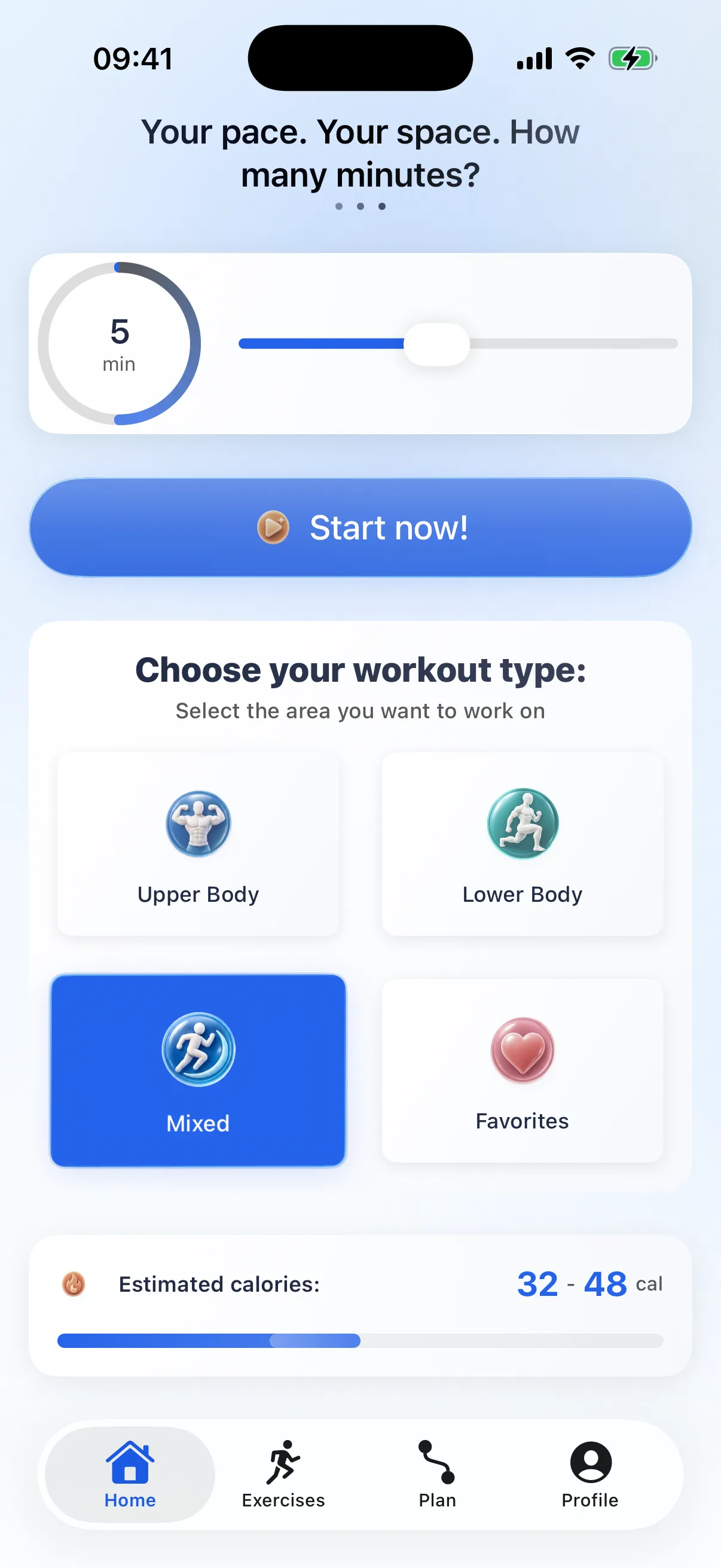
The practical advantage is responsiveness. A static app gives you sessions. A better AI app adjusts frequency, difficulty, or exercise selection based on what you actually complete.
Foster’s work on session RPE is useful here because it shows why internal load matters. Two workouts can look identical on paper and feel very different in the body. An app that pays attention to effort, completion, and recent behavior is closer to real coaching than an app that just rotates exercises.
That is also why many users who are shopping in the best AI fitness apps category are really looking for one thing: a system that reacts instead of repeating.
The limits that still matter
(PMID 11357117; PMID 40343215; PMID 38054236; PMID 27927218)
AI still has obvious blind spots.
It is weaker at movement-quality feedback unless computer-vision tools are unusually strong, and even then the judgment is narrower than what a good coach can do in person.
It is weaker with injury nuance, unusual constraints, and the emotional side of coaching. A human trainer can notice hesitation, pain behavior, or life context in ways current consumer apps usually cannot.
That means the honest comparison is not AI versus human, full stop. It is:
- AI for access, scale, and everyday structure
- human coaching for high-touch feedback, biomechanics, and complexity
For many people, AI is the better first step. For others, especially those with technical lifting goals or injury history, it is better seen as a supplement.
Who benefits most
(PMID 38054236; PMID 27927218; PMID 21694556; PMID 11357117)
AI coaching is strongest for:
- beginners who need structure
- busy users who benefit from short adaptive sessions
- people who will not maintain live-coach sessions financially
- users who respond well to data, progress cues, and low-friction guidance
If that sounds like you, the relevant comparison is less “can AI replace a coach?” and more “does this app make it easier for me to keep showing up?”
Bottom line
(PMID 21694556; PMID 11357117; PMID 40343215; PMID 38054236)
AI fitness trainer apps are most valuable when they do three things well:
- reduce decision fatigue
- adapt to actual behavior
- keep the plan usable on ordinary days
That is not the same as full human coaching. It does not need to be.
It just needs to be better than static advice and realistic enough to help you train this week, not just imagine a better routine someday.
References
Sources
Expert perspective
The Frontiers systematic review found that human, AI, and hybrid coaching models all showed feasibility and acceptability, while inconsistent engagement measures still limited direct comparisons.
Frontiers systematic review authors · Systematic review authors · Frontiers in Digital Health · Source: https://pubmed.ncbi.nlm.nih.gov/40343215/