Why Workout App Reminders Work: The Science of Timing
Workout app reminders work best when timing, context, and fatigue are designed together. Learn when to use exercise notifications and when to quiet them.
The worst workout reminder is not the one you ignore.
It is the one that teaches you to ignore the next one.
A phone buzzes at 6:00 PM while you are driving, cooking, in a meeting, or already mentally done for the day. The message may be cheerful. The timing is still wrong. After enough of those moments, the reminder stops being a cue and becomes background noise.
That is the hidden problem with workout app reminders. Most people ask, “Should I turn notifications on?” The better question is, “When would a reminder actually make exercise easier to start?”
The science points to a more precise answer: reminders work when they meet a real window of opportunity. They help when they reduce decision load, attach to a stable cue, and offer a session small enough to start now. They backfire when they arrive too often, ask for too much, or interrupt a context where exercise is impossible.
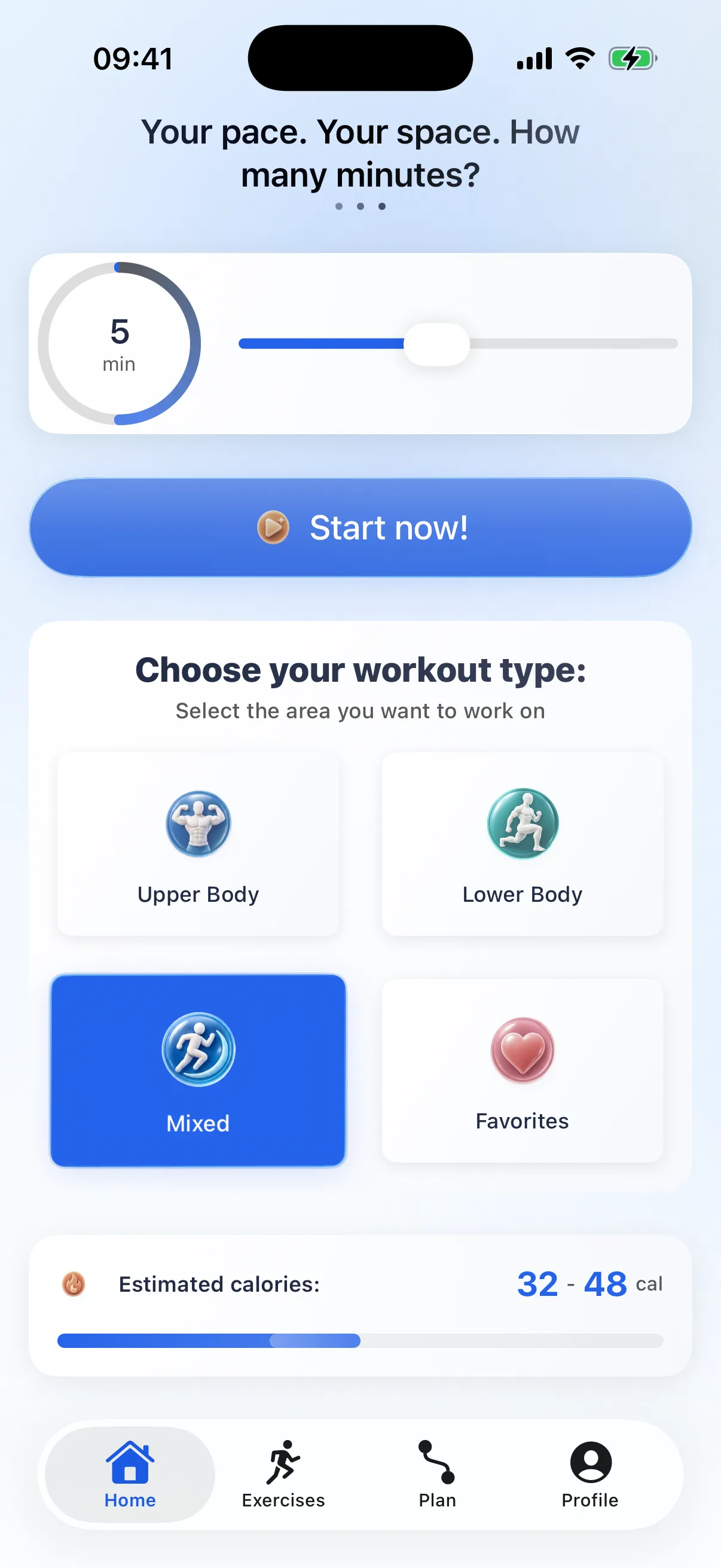
For RazFit, that distinction matters because the app is built around short bodyweight sessions, streaks, badges, and AI guidance. A reminder for a 5-minute session is a different tool than a reminder for a 45-minute gym block. The timing can be tighter. The ask can be smaller. The interruption has to earn its place on the lock screen.
Reminders are behavior cues, not motivation injections
(Sources: Just-in-Time Adaptive Interventions (JITAIs) in Mobile Health: Key Components and Design Principles for Ongoing Health Behavior Support; Associations Between Digital Health Intervention Engagement, Physical Activity, and Sedentary Behavior: Systematic Review and Meta-analysis; Text Message Interventions for Physical Activity: A Systematic Review and Meta-Analysis; The behavior change technique taxonomy (v1) of 93 hierarchically clustered techniques: building an international consensus for the reporting of behavior change interventions) (Source 1; Source 2; Source 3; Source 4; Source 5; Source 6)
A useful reminder does not create motivation from nowhere. It points your attention toward a behavior you already intended to do.
Michie and colleagues developed the Behavior Change Technique Taxonomy v1 to make intervention content more precise. Their 2013 consensus work organized 93 behavior change techniques into 16 groups (PMID 23512568). “Prompts/cues” is one of those techniques, but it sits alongside action planning, feedback, goal setting, self-monitoring, and social support. That matters. A reminder is rarely enough by itself.
Smith and colleagues reached a similar practical conclusion in their 2020 systematic review and meta-analysis of text message interventions for physical activity (PMID 31759805). Across 59 included studies with 8,742 participants, text message interventions led to higher objectively measured steps after the intervention compared with controls. In the meta-analysis, the effect for steps was Cohen’s d = 0.38. The effect for moderate-to-vigorous physical activity pointed in the same direction but was not statistically significant.
The useful reading is not “texts magically make people active.” It is more modest and more helpful: reminders can move behavior when they are part of a larger structure. Smith’s review also found that interventions with tailored content and more components tended to have larger effects, although those subgroup differences were not statistically significant.
That is why a workout notification should never carry the whole habit on its back. It should connect to a pre-decided action: “Start a 5-minute strength session,” “protect the streak with a minimum workout,” or “do the post-coffee routine.” If the notification forces you to decide what to do, how long to train, and whether today counts, it has already made the moment heavier.
This is where app design and habit design meet. The guide to habit stacking workouts explains how stable daily anchors make exercise more automatic. A reminder works best when it reinforces that anchor, not when it tries to replace it.
Timing is a window, not a clock time
(Sources: Identifying Behavior Change Techniques in an Artificial Intelligence-Based Fitness App: A Content Analysis; To Prompt or Not to Prompt? A Microrandomized Trial of Time-Varying Push Notifications to Increase Proximal Engagement With a Mobile Health App; Just-in-Time Adaptive Interventions (JITAIs) in Mobile Health: Key Components and Design Principles for Ongoing Health Behavior Support; Associations Between Digital Health Intervention Engagement, Physical Activity, and Sedentary Behavior: Systematic Review and Meta-analysis) (Source 1; Source 2; Source 3; Source 4; Source 5; Source 6)
The classic alarm model treats reminder timing as a static setting: 7:00 AM, 12:30 PM, 6:00 PM. Real life does not behave that neatly.
Nahum-Shani and colleagues describe just-in-time adaptive interventions, or JITAIs, as mobile health support that adapts to a person’s changing internal and contextual state (PMID 27663578). Their framework names decision points, tailoring variables, intervention options, and decision rules. In plain English: the moment should matter more than the schedule.
For exercise, a decision point might be “the user usually trains after work.” Tailoring variables might include time of day, recent workouts, streak risk, current activity, or whether the user has already dismissed two prompts this week. The intervention option might be a reminder, a quieter in-app cue, or no interruption at all.
According to Inbal Nahum-Shani, PhD, research professor at the University of Michigan Institute for Social Research, JITAIs are built around support that changes with the user’s state and context. The practical implication for workout notification timing is direct: a reminder should be delivered when help is likely to be useful, not merely when the calendar says exercise was planned.
Bidargaddi and colleagues tested this kind of timing question in a microrandomized trial of push notifications in a workplace well-being app (DOI 10.2196/10123). The study included 1,255 users over 89 days and randomized available users at one of six daily time points. Sending a tailored health message made users 3.9% more likely to engage with the app in the next 24 hours. The estimated effect was larger on weekends than weekdays, and the strongest observed window was 12:30 PM on weekends, when users were 11.8% more likely to engage.
Those results do not prove that every workout app should ping at lunch on Saturday. The study measured proximal app engagement, not completed exercise sessions, and it used a workplace well-being product. Still, it shows the core point: timing effects vary by context. A reminder can be helpful in one window and forgettable in another.
For a short workout app, that suggests a practical rule. Choose windows when the next action is physically possible. Before the first meeting. After coffee. After work clothes come off. During a lunch break. A reminder sent while you cannot act is not neutral. It trains dismissal.
Notification fatigue starts when the ask is wrong
(Sources: Text Message Interventions for Physical Activity: A Systematic Review and Meta-Analysis; The behavior change technique taxonomy (v1) of 93 hierarchically clustered techniques: building an international consensus for the reporting of behavior change interventions; Identifying Behavior Change Techniques in an Artificial Intelligence-Based Fitness App: A Content Analysis; To Prompt or Not to Prompt? A Microrandomized Trial of Time-Varying Push Notifications to Increase Proximal Engagement With a Mobile Health App) (Source 1; Source 2; Source 3; Source 4; Source 5; Source 6)
People usually blame notification fatigue on frequency. Frequency matters, but the deeper issue is mismatch.
A once-a-day reminder can still feel annoying if it asks for a workout you cannot do. A twice-a-week reminder can be useful if it arrives at the exact moment you have shoes on, space available, and five minutes before the next obligation.
Bidargaddi’s paper notes a broader mobile health problem: app engagement often drops over time, and smartphone users already receive many notifications from many apps. The authors also cite concerns that too many notifications can increase inattention and reduce well-being. That is not a fitness-specific finding, so it should be applied carefully. But anyone who has swiped away the same “time to move” message for the tenth time knows the pattern.
McLaughlin and colleagues’ 2021 systematic review and meta-analysis adds another caution (PMID 33605897). They found a weak but consistent positive association between engagement with digital physical activity interventions and physical activity outcomes. In 11 studies included in the meta-analysis, the association was small: 0.08 with a 95% CI of 0.01 to 0.14. They also found that time-based usage measures were mixed. Spending more time in an intervention was not automatically better.
That matters for reminders because more pings can create more app usage without creating better exercise behavior. Opening the app is not the same as training. Staring at a streak screen is not the same as completing a session. The reminder should be judged by the behavior it starts, not the attention it captures.
Kuru’s 2024 content analysis of an AI-based fitness app gives a product-level clue (PMID 38054236). The study identified 15 unique behavior change techniques in Freeletics and reviewed 400 user comments. Goal setting, action planning, self-monitoring, and social support appeared among the prevalent techniques. Users also pointed to areas for improvement, including simpler personalization options and more specific feedback.
That is the notification fatigue lesson hiding inside app design: a reminder gets tiring when the system makes the user do too much interpretation. “Workout now” is often too vague. “You have a 6-minute cardio session ready before your next streak reset” is more useful because it answers the next question before the user has to ask it.
Match the reminder to the workout length
(Sources: Just-in-Time Adaptive Interventions (JITAIs) in Mobile Health: Key Components and Design Principles for Ongoing Health Behavior Support; Associations Between Digital Health Intervention Engagement, Physical Activity, and Sedentary Behavior: Systematic Review and Meta-analysis; Text Message Interventions for Physical Activity: A Systematic Review and Meta-Analysis; The behavior change technique taxonomy (v1) of 93 hierarchically clustered techniques: building an international consensus for the reporting of behavior change interventions) (Source 1; Source 2; Source 3; Source 4; Source 5; Source 6)
A reminder for a short workout has one advantage: the ask can be honest.
If a notification implies a full training session, the user mentally checks the calendar. Do I have time? Do I need a shower? Will I be sore tomorrow? Can I still get dinner done? That negotiation can kill the behavior before the app opens.
A 5- to 10-minute session changes the math. The question becomes smaller: can I start now? That is why short-session design matters in the broader fitness app features for busy people conversation. Low decision load is not a nice extra. It is part of the behavior change mechanism.
For RazFit-style sessions, the notification should name the smallest viable action. A strength reminder might point to Orion and a short bodyweight block. A cardio reminder might point to Lyssa and a no-equipment burst. A streak reminder should make the minimum clear rather than implying a perfect day is required.
This avoids duplicating the job of streaks. The article on workout streak consistency covers why streaks can protect repetition. Reminder timing has a narrower job: bring the user back at a moment when protecting the streak is possible. The notification is the doorbell, not the whole house.
There is a useful analogy here: reminders are like airport boarding calls. A good one tells the right passenger, at the right gate, with enough time to move. A bad one blasts the whole terminal every five minutes until everyone stops listening.
Comparison guides such as the best short workout apps exist because session length changes the whole app experience. A short workout app can use reminders that point to immediate completion. A traditional workout app often has to remind you to plan, travel, warm up, train, and recover. Those are different behavioral asks.
A timing protocol for workout app reminders
(Sources: Identifying Behavior Change Techniques in an Artificial Intelligence-Based Fitness App: A Content Analysis; To Prompt or Not to Prompt? A Microrandomized Trial of Time-Varying Push Notifications to Increase Proximal Engagement With a Mobile Health App; Just-in-Time Adaptive Interventions (JITAIs) in Mobile Health: Key Components and Design Principles for Ongoing Health Behavior Support; Associations Between Digital Health Intervention Engagement, Physical Activity, and Sedentary Behavior: Systematic Review and Meta-analysis) (Source 1; Source 2; Source 3; Source 4; Source 5; Source 6)
The best reminder setup is boring. That is a compliment.
Start with one primary workout window. Pick a time when exercise is usually possible, not merely aspirational. Morning works for many people because fewer obligations have piled up. Lunch can work if there is a predictable break. Evening works only if the reminder comes before the couch or dinner routine has swallowed the window.
Then attach the reminder to a real cue. “After coffee” is stronger than “sometime before work.” “After shutting the laptop” is stronger than “evening.” The reminder should arrive near the cue, not hours before it. If the cue is stable enough, you may eventually need the notification less often.
Use a two-layer system:
- One planned reminder for the normal workout window.
- One recovery reminder only when a streak, badge, or weekly target is at risk.
That second reminder should stay small. It should point to a minimum session, not a guilt trip. “Keep the streak with 5 minutes” is cleaner than “you missed your workout.” The wording matters because shame is a poor long-term interface.
Add a cooldown rule. If you dismiss a workout reminder twice in a row, the app should stop repeating the same prompt and offer a better choice next time: shorter session, different window, or rest-day movement. Repeating a failed prompt is how notifications become wallpaper.
Use weekly review instead of daily nagging. Once a week, look at which reminders started workouts and which ones were ignored. Keep the windows that produced action. Remove the windows that produced dismissal. The goal is not to receive more fitness app notifications. The goal is to need fewer, better ones.
One caveat: reminders are not medical advice and should not override recovery signals, pain, illness, or sleep debt. If your body is clearly asking for rest, the better prompt is a recovery option. A useful app makes the next healthy action easier, even when that action is not a hard workout.
What this means inside RazFit
(Sources: Text Message Interventions for Physical Activity: A Systematic Review and Meta-Analysis; The behavior change technique taxonomy (v1) of 93 hierarchically clustered techniques: building an international consensus for the reporting of behavior change interventions; Identifying Behavior Change Techniques in an Artificial Intelligence-Based Fitness App: A Content Analysis; To Prompt or Not to Prompt? A Microrandomized Trial of Time-Varying Push Notifications to Increase Proximal Engagement With a Mobile Health App) (Source 1; Source 2; Source 3; Source 4; Source 5; Source 6)
RazFit reminders work best when they respect the product’s real advantage: short, guided sessions that can happen at home without equipment.
That means the most effective notification is specific, timely, and small enough to act on immediately. It should help you choose between Orion for strength and Lyssa for cardio, protect a streak without demanding perfection, and make badges feel like progress rather than pressure.
The science does not support a simple “more reminders equals more workouts” rule. The evidence is subtler. Text interventions can increase physical activity. Digital engagement is weakly but consistently associated with physical activity outcomes. JITAIs argue for context-sensitive support. Push notification trials suggest timing changes response. AI fitness app research points toward action planning, self-monitoring, feedback, and simpler personalization.
Put together, the message is clear enough: a workout app reminder earns attention when it arrives at a moment where the user can act.
Set one reminder for your best window this week. Make the session short. Track whether the reminder starts a workout or just creates a swipe. Then adjust the window, not your character.
Related Articles
- Habit Stacking: Build Workout Habits
- Workout Streaks: The Psychology of Consistency
- Fitness App Features for Busy People
- Best Short Workout Apps
References
-
Nahum-Shani, I., Smith, S.N., Spring, B.J., Collins, L.M., Witkiewitz, K., Tewari, A., & Murphy, S.A. (2018). “Just-in-Time Adaptive Interventions (JITAIs) in Mobile Health: Key Components and Design Principles for Ongoing Health Behavior Support.” Annals of Behavioral Medicine, 52(6), 446-462. https://pubmed.ncbi.nlm.nih.gov/27663578/
-
McLaughlin, M., Delaney, T., Hall, A., Byaruhanga, J., Mackie, P., et al. (2021). “Associations Between Digital Health Intervention Engagement, Physical Activity, and Sedentary Behavior: Systematic Review and Meta-analysis.” Journal of Medical Internet Research, 23(2), e23180. https://pubmed.ncbi.nlm.nih.gov/33605897/
-
Smith, D.M., Duque, L., Huffman, J.C., Healy, B.C., & Celano, C.M. (2020). “Text Message Interventions for Physical Activity: A Systematic Review and Meta-Analysis.” American Journal of Preventive Medicine, 58(1), 142-151. https://pubmed.ncbi.nlm.nih.gov/31759805/
-
Michie, S., Richardson, M., Johnston, M., Abraham, C., Francis, J., et al. (2013). “The behavior change technique taxonomy (v1) of 93 hierarchically clustered techniques: building an international consensus for the reporting of behavior change interventions.” Annals of Behavioral Medicine, 46(1), 81-95. https://pubmed.ncbi.nlm.nih.gov/23512568/
-
Kuru, H. (2024). “Identifying Behavior Change Techniques in an Artificial Intelligence-Based Fitness App: A Content Analysis.” Health Education & Behavior, 51(4), 636-647. https://pubmed.ncbi.nlm.nih.gov/38054236/
-
Bidargaddi, N., Almirall, D., Murphy, S., Nahum-Shani, I., Kovalcik, M., et al. (2018). “To Prompt or Not to Prompt? A Microrandomized Trial of Time-Varying Push Notifications to Increase Proximal Engagement With a Mobile Health App.” JMIR mHealth and uHealth, 6(11), e10123. https://pubmed.ncbi.nlm.nih.gov/30497999/